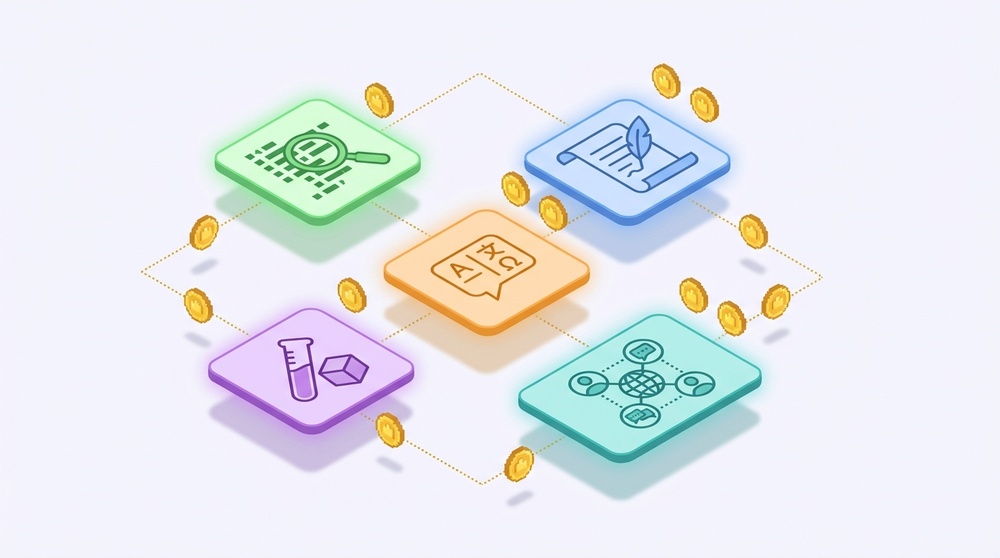













Imagine owning a share of a luxury Dubai skyscraper, U.S. Treasury bonds, or a gold bar—starting from just $10–50. No mortgages, no bank managers, no waiting. This is the power of fractionalized RWAs (Real World Assets) on the blockchain. If you're wondering how it works and if you can really earn from it, you're in the right place. We'll break it all down in simple terms, no fluff.
Table of Contents
- What Are RWAs and Fractionalization – Explained Simply
- How the Tokenization Mechanism Works
- Types of Fractionalized RWAs
- How and How Much You Can Earn
- RWA vs. Traditional Investments
- Beginner's Step-by-Step Guide
- Advanced Yield Strategies
- Risks and How to Mitigate Them
- RWA Ecosystem: Key Blockchains
- Who Is This For?
- RWA Investor's Glossary
- Frequently Asked Questions
What Are RWAs and Fractionalization? Explained Simply
The acronym RWA stands for Real World Assets. These are physical assets from the real world, such as real estate, gold, government and corporate bonds, private company shares, art, agricultural land, and infrastructure. Fractionalization is the process of dividing a high-value asset into many small, equal parts (fractions). Each fraction is represented by a digital token on a blockchain. Owning a token makes you a legally recognized fractional owner of the underlying asset, entitled to a proportional share of its income.
Simple Analogy: Imagine a building worth $1,000,000, divided into 100,000 tokens at $10 each. Buying one token makes you a fractional owner. If the building generates $100,000 in annual rent, your token entitles you to $1 per year. Buying 100 tokens ($1,000) yields $100 annually—a 10% yield. It's like an ETF on the blockchain, but without a broker and with a $10 entry point.
Ever wanted to invest in commercial real estate but were stopped by the high entry cost of $50,000+? Or wanted to buy U.S. Treasury bonds without a U.S. brokerage account? Fractionalized RWAs solve both problems instantly—opening access to premium assets for anyone with an internet connection and as little as $10.
The key difference from regular cryptocurrencies is that RWAs are backed by real assets. Their value isn't based on hype or speculation, but on tangible assets like buildings, gold, or government debt, which drastically reduces volatility and makes returns more predictable.

How Real-World Asset Tokenization Works – The Complete Process
Understanding the mechanism builds trust. Let's trace the full chain, from a physical asset to your wallet.
① Asset & Legal Structure
A real asset (building, gold bar, bond portfolio) is transferred to a Special Purpose Vehicle (SPV). This SPV legally holds the asset, isolating it from the platform's operational risks.
② On-Chain Tokenization
Tokens (like ERC-20) are issued on a blockchain (Ethereum, Polygon, Stellar, etc.), each representing a legal share in the SPV. The tokenomics are encoded in a smart contract.
③ Verification & Purchase
Tokens are listed on a specialized RWA platform. Investors pass a standard KYC check, fund their account with crypto or fiat, and purchase tokens. The process takes 10 minutes to a day.
④ Automated Yield Distribution
Income from the underlying asset (rent, coupon payments) flows into a smart contract, which automatically distributes it proportionally to all token holders in USDC, USDT, or native platform tokens.
Why Smart Contracts Are Revolutionary
A smart contract is self-executing code. It can't "forget" to pay you. It can't delay payments for its own needs. It's immune to human error, corruption, or negligence. Once conditions are met, funds are sent automatically. Every transaction is recorded on a public blockchain for anyone to verify—a level of transparency traditional finance can't match.
Two-Layer Investor Protection
Well-structured RWA projects offer a two-layer protection system.
- Your tokens = legal rights to a share in the SPV
- The SPV owns the real asset
- If the platform fails, the asset remains protected
- Legal agreements are backed by offline documentation
- Smart contracts are audited by independent firms
- All transactions are immutably recorded
- Yield distribution is automatic and transparent
- Open-source code allows for public verification
Types of Fractionalized RWAs – A Complete Overview
The tokenized real-world asset market spans several major categories, each with unique yield, risk, liquidity, and entry points.
Tokenized Real Estate
The most popular and intuitive asset class. Includes residential and commercial properties, offices, malls, warehouses, hotels, and land globally (USA, Europe, UAE, Asia).
Income Sources
- Regular rental payments (monthly)
- Appreciation in property value
- Refinancing or sale proceeds
Typical Yields
- Residential: 5–9% APY
- Commercial: 8–14% APY
- Industrial/Warehouse: 7–12% APY
- Short-term rentals: up to 15% APY
Tokenized Bonds & Debt Instruments
Includes government treasuries (like U.S. Treasuries), corporate bonds, and structured debt pools. This is a secure and predictable asset class with fixed coupon payments. Tokenized U.S. Treasuries allow any global investor to earn 4–6% APY in dollars without a U.S. brokerage account.
Tokenized government bonds are one of the fastest-growing RWA segments. Major asset managers are launching their own tokenized funds, moving this asset class from niche to mainstream.
Tokenized Commodities (Gold, Silver, Oil)
Physical gold, silver, platinum, oil, and agricultural goods stored in certified vaults, with digital tokens representing ownership. Each token is backed by a physical gram or ounce stored in a certified facility. An ideal hedge against inflation and currency risk.
Tokenized Art & Collectibles
Masterpiece paintings, rare jewelry, fine wines, vintage cars, and antiques. Historically, these assets have yielded 7–12% annually with low correlation to stock markets. Previously accessible only to the ultra-wealthy.
Tokenized Private Credit
One of the highest-yielding and fastest-growing segments. Specialized platforms issue business loans to real companies (manufacturing, trade, fintech). Investors funding these loans via tokens can earn 10–20% APY in stablecoins.
Tokenized Infrastructure Assets
A more exotic but compelling class: renewable energy plants, toll roads, airports, telecom infrastructure. These assets generate stable cash flows for decades, traditionally the domain of pension funds. Now accessible from $50.

How and How Much You Can Earn – All Income Mechanisms
There are several ways to profit from RWA tokens, from simple to advanced.
Mechanism 1: Passive Recurring Distributions
The simplest and most popular method. You buy tokens of an income-generating asset and receive periodic distributions—like dividends or rent, but fully automated and transparent.
Mechanism 2: Capital Appreciation
Beyond yield, token prices track the underlying asset's value. If tokenized real estate appreciates 15%, your tokens also gain 15% in value. Selling them on the secondary market locks in capital gains on top of yield.
Mechanism 3: Secondary Market Trading
Most RWA platforms have built-in secondary markets or DEX integration. You can buy tokens at one price and sell higher, similar to stocks, but without a stockbroker. This also provides liquidity, a key advantage over traditional real estate.
Mechanism 4: Yield Farming with RWAs in DeFi
An advanced strategy for maximizing returns. Use RWA tokens as collateral on DeFi platforms like MakerDAO, Aave, or Morpho to borrow or provide liquidity, multiplying your base yield. (Note: Higher risk).
Who is DeFi Yield Farming For?
This is an advanced strategy with higher risks (liquidation, smart contract risk). If you're new, start with simply buying and holding RWA tokens for yield. That alone beats bank deposits or idle stablecoins. Learn the basics before advancing.
RWA Yield Comparison
| Income Mechanism | Typical APY | Complexity | Risk | Activity Level |
|---|---|---|---|---|
| Passive Distributions | 5–14% APY | Low | Low-Medium | Minimal |
| Capital Appreciation | Variable | Low | Medium | Minimal |
| Secondary Market Trading | Variable | Medium | Medium | Active |
| DeFi Yield Farming | 15–30%+ APY | High | High | Active |
| Private Credit Tokens | 10–20% APY | Low | Medium | Minimal |
Ready to Earn Passive Income from Real-World Assets?
Thousands of investors are already earning 8–20% APY on tokenized real estate, bonds, and private credit. Minimum entry: $10. Start now.
Go to PlatformFractional RWAs vs. Traditional Investments – Honest Comparison
Before investing, compare the alternatives. Let's look at the numbers.
| Parameter | Traditional Real Estate | Bank Deposit | Stocks/ETFs | Fractional RWAs |
|---|---|---|---|---|
| Minimum Entry | $50,000+ | $100–1,000 | $100–500 | from $10 |
| Liquidity | Months to sell | High | High (Market Hours) | High (24/7) |
| Typical Yield | 5–12% APY | 1–5% APY | 7–12% APY (avg.) | 5–20% APY |
| Transparency | Limited | Limited | Medium | Full (Blockchain) |
| Diversification | Very Hard | No | Available | Instant (from $50) |
| Geographic Reach | Local | Local | Global | Global |
| Accessibility | Complex Process | Simple | Needs Broker | Online, 10 minutes |
| Passive Income | Requires Management | Passive | Partially | Fully Passive |
| Crypto Correlation | None | None | Partial | Low |
The numbers speak for themselves. Fractional RWAs combine the best of all worlds: the stability and backing of real assets + the accessibility and flexibility of digital assets + the transparency and automation of blockchain. They don't replace stocks or deposits but fill a crucial gap in a diversified portfolio.
"Tokenizing real-world assets isn't just a tech trend. It's a fundamental rethinking of who can own assets and earn from them. Fractionalization makes wealth accessible—and that changes the game forever."
Beginner's Guide: How to Start Investing in Fractional RWAs
Think it's technically complex? It's easier than opening a bank account. Here's a step-by-step guide from zero to your first yield payment.
Step 1 – Choose a Platform
Research RWA platforms. Look for: legal structure (SPV), smart contract audits, track record, asset types, minimums, fees, and user reviews. Start with a verified platform with a transparent history.
Step 2 – Complete KYC
Legitimate platforms require KYC (Know Your Customer): ID, a selfie with your document, sometimes proof of address. Takes 5–30 minutes. This protects you and ensures regulatory compliance.
Step 3 – Fund Your Account
Deposit via crypto (USDC, USDT, ETH, BTC) or fiat via bank transfer/card. Start with an amount you're comfortable locking for 6+ months.
Step 4 – Analyze & Choose Assets
Review available assets: APY, asset type, performance history, and secondary market terms. Don't put all your capital in one asset; diversify across 3-5 different assets.
Step 5 – Purchase Tokens
Select an asset, click "Invest," enter the amount, and confirm. That's it. You are now a fractional owner. Yields start accruing immediately.
Step 6 – Monitor & Reinvest
Use the platform dashboard to track payouts, portfolio value, and performance. Reinvest your earnings to benefit from compound interest.
Practical First-Month Strategy
Start with $50–200 on one platform, in one asset. Your goal for the first month is not to get rich, but to understand the system: how the dashboard works, how payouts arrive, how the secondary market functions. Once comfortable, you can scale and diversify.
Advanced Strategies to Maximize RWA Yields
Passive yield is great, but experienced investors can optimize further.
Strategy 1: Aggressive Reinvesting (Compounding)
Reinvest every yield payment immediately to buy more tokens. This activates compound interest, one of the most powerful wealth-building tools. The effect grows exponentially over time.
Example: The Power of Compounding
- Starting Capital: $1,000
- APY: 12% (realistic for private credit RWA)
- Without Reinvesting: $120/year → $1,600 after 5 years
- With Reinvestment (3y): ~$1,404 (+40% growth)
- With Reinvestment (5y): ~$1,762 (+76% growth)
- With Reinvestment (10y): ~$3,106 (+211% growth)
- Difference after 10y: $3,106 vs $2,200 (no compounding) – a 41% gain from just reinvesting!
Strategy 2: Diversified RWA Portfolio
Spread your capital across asset classes for balance.
Conservative (40%)
- Tokenized U.S. Treasuries (4–6% APY)
- Tokenized Residential Real Estate (6–9% APY)
- Tokenized Gold (inflation hedge)
Growth & Income (60%)
- Tokenized Commercial Real Estate (10–14% APY)
- Private Credit Tokens (12–20% APY)
- Infrastructure RWA (stable cash flow)
Strategy 3: Dollar-Cost Averaging (DCA)
Don't try to time the market. Invest a fixed amount (e.g., $100/month) regardless of market conditions. This averages your entry price, reduces volatility impact, and builds discipline. Combine with yield reinvestment for maximum effect.
Strategy 4: Multi-Platform Diversification
Don't keep all tokens on one platform. Spread across 2–4 reputable platforms. This reduces platform-specific risk and gives you access to unique assets and geographies.

Risks of Fractional RWAs – Full & Honest Breakdown
All investments carry risk. Knowing them is not a reason to avoid RWAs, but to engage with them wisely.
Smart Contract Risk
Code can have bugs or be exploited. Mitigation: Choose platforms with independent smart contract audits from firms like Certik, Quantstamp, OpenZeppelin.
Regulatory Risk
Laws for tokenized assets are evolving. Mitigation: Invest via regulated platforms in transparent jurisdictions.
Liquidity Risk
Some RWA tokens have thin secondary markets. Mitigation: Check trading volumes. Don't invest funds you may need urgently.
Counterparty & Management Risk
The SPV or management company could be incompetent or fraudulent. Mitigation: Choose platforms with verified teams, public legal docs, and audited financials.
Market Risk
Real estate, commodities, and bonds can lose value. Mitigation: Diversify across asset classes and geographies.
Technology Risk
Network congestion, exchange hacks, platform outages. Mitigation: Use hardware wallets, diversify across platforms.
Golden Rule of Risk Management
Never allocate more than 10–15% of your total capital to a single asset or platform. Diversification isn't excessive caution; it's a fundamental principle of capital preservation. A well-structured RWA portfolio is spread across asset classes, platforms, and geographies.
RWA Ecosystem: Key Blockchains & Infrastructure
Fractional RWAs exist on several blockchains. Understanding the infrastructure helps you choose platforms.
| Blockchain | Key RWA Advantages | Example Projects |
|---|---|---|
| Ethereum | Max security, largest DeFi ecosystem, institutional trust | MakerDAO RWA Vaults, Centrifuge, Maple |
| Polygon | Low fees, fast, EVM-compatible | RealT, Tangible, Homespace |
| Stellar | Built for finance, compliance-ready | Franklin Templeton's BENJI, Bond tokens |
| Solana | High throughput, minimal fees | Emerging RWA protocols, Parcl (real estate) |
| Avalanche | Custom subnets, institutional focus | Institutional RWA projects |
| Base (Coinbase L2) | Regulatory clarity, low fees, corporate backing | Emerging RWA ecosystem |
Most beginners start on Ethereum or Polygon-based platforms—they are the most battle-tested and have the widest DeFi integration for advanced strategies.
Who Are Fractional RWAs For?
Be honest about your investor profile. Fractional RWAs are ideal for specific investor types.
Beginners with Small Capital
If you have $50–500 and want your money to work, but real estate and bonds seem out of reach, RWAs are your start. No complex setup, intuitive interface, real yield.
Stablecoin Holders
Earning 0% on USDC/USDT? Move it into tokenized bonds or private credit for 6–15% APY. A logical upgrade for idle stablecoins.
Experienced Investors Seeking Diversification
Already have stocks/crypto? Add tokenized real estate or bonds for stable yield and low correlation to your existing portfolio.
Passive Income Seekers
Don't want to trade or stare at charts? Buy RWA tokens, collect automated payouts. No trading, no stress, just yield.
Inflation Hedgers
Real estate and commodities are classic inflation hedges. Now accessible fractionally.
Borderless Investors
Want to invest in U.S. real estate, European bonds, and Asian infrastructure simultaneously? Blockchain removes geographic barriers.
RWA Investor's Glossary
Key terms you'll encounter:
SPV (Special Purpose Vehicle)
A legal entity created solely to hold a specific asset, isolating it from platform risk. The core of secure RWA structures.
APY (Annual Percentage Yield)
The effective annual rate of return, including compound interest. The key metric for comparing RWA yields.
KYC (Know Your Customer)
Mandatory identity verification. A sign of a compliant, legitimate platform.
Smart Contract
Self-executing code on a blockchain that automates yield distribution and ownership rights.
Tokenization
Converting rights to a real-world asset into a digital token on a blockchain.
Yield
Income generated by an asset, expressed as a percentage of its value.
Private Credit
Direct loans to businesses, often yielding 10-20% APY, now accessible via tokens.
Secondary Market
Platform where existing RWA tokens can be traded before the underlying asset matures.
Stablecoin
Price-stable cryptocurrency (USDC, USDT) used for RWA payouts.
DeFi (Decentralized Finance)
Ecosystem where RWA tokens can be used as collateral for lending/borrowing.
Smart Contract Audit
Independent security review of the platform's code. A must for due diligence.
Fractionalization
Splitting a high-value asset into many small, affordable digital shares.
Frequently Asked Questions
Safety depends on the platform. Choose regulated platforms with audited smart contracts, transparent SPV structures, and verified teams. Always do your own research (DYOR).
No. Modern RWA platforms have intuitive interfaces, often simpler than online banking. Many accept fiat directly, no crypto wallet needed to start. Advanced DeFi strategies require more knowledge.
Depends on the platform and asset. Some accrue daily, others pay monthly/quarterly. First payments typically arrive within 1-4 weeks of investment.
Usually, yes. Most platforms have a secondary market or DEX integration. However, liquidity can vary, and the sale price may differ from the asset's net asset value.
RWAs are backed by real-world assets, offering yield from the physical economy, not just crypto markets. Returns are more predictable and less correlated to crypto market swings.
In most jurisdictions, yes. RWA yields are typically treated as investment income or capital gains. Consult a local tax professional.
Technically, from $10. For meaningful diversification, $200–500 split across 3-5 assets is a solid start. A portfolio generating $200-500/month in passive income typically requires a $20k-$50k investment at 12% APY.
With a proper SPV structure, the asset is legally separate. If the platform fails, the SPV continues, and a trustee manages the asset for token holders.
Your Next Step: From Knowledge to Action
You've just explored one of the most promising investment tools of the decade: fractionalized RWAs. This isn't hype or a get-rich-quick scheme. It's technologically-enabled access to the real assets that have built wealth for institutions for decades.
Now, this access is open to anyone. Tokenized real estate, government bonds, and private credit generate real yield from the real economy. And it's now accessible to you.
This content is for educational and informational purposes only and does not constitute financial advice. Investing in tokenized real-world assets (RWA) and crypto assets carries risks, including potential loss of capital. Always conduct your own research (DYOR) and consider consulting a qualified financial advisor.