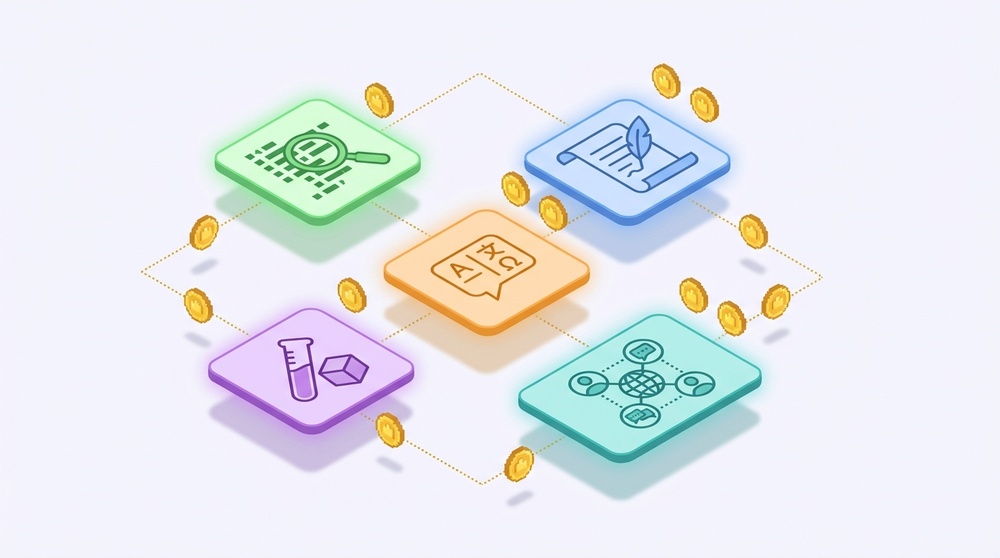












Have you ever looked at a memecoin that 100x'd in 48 hours and thought: "What if I owned the platform that launched it?" While some chase 100x on tokens, others build the infrastructure where those tokens are born. They earn on every launch, regardless of a token's success. This guide is about building and managing your own memecoin launchpad.
📋 Table of Contents
- What is a Memecoin Launchpad & How It Earns
- Types of Launchpads: Which One to Choose
- Technical Foundation: What You Need to Start
- Choosing the Right Blockchain
- Monetization Models: Where the Money Comes From
- Step-by-Step Launch Guide
- How to Attract the First Projects
- Community as Your Key Asset
- Risks and How to Manage Them
- Essential Tools and Services
- Frequently Asked Questions
What is a Memecoin Launchpad and How It Makes Money
Imagine a startup incubator, but for memecoins. A Memecoin Launchpad is a platform providing the infrastructure for new memecoins: smart contracts, an investor interface, anti-bot protection, and token distribution. The key insight: you're not betting on token prices; you're building the casino that profits from every bet.
Key insight: You're not speculating on token prices—you're building the infrastructure. The house always wins, and a launchpad is the house in the crypto casino.
How a Launchpad Earns Per Launch
Imagine 20 projects launch on your platform in a month, each raising $50,000 in presale. That's $1M in volume. At a 3% fee, that's $30,000 in fees alone, plus listing fees and potential token allocations. This isn't fantasy; it's the math behind active launchpads.

Launchpad revenue streams: fees, allocations, and service charges
Types of Memecoin Launchpads: Which One to Choose
Before writing a single line of code, understand the model you're building. Each has its audience, tech needs, and revenue potential.
🚀 IDO Launchpad
The classic model: a project holds a presale on your platform, and tokens are automatically listed on a DEX. You take a fee on the raise and/or an allocation. The most in-demand format.
🎪 Fair Launch Platform
No presale—tokens are available to all at the same price. Minimal barriers for projects. Huge audience among "fair launch" enthusiasts.
💎 Whitelist / Tiered Launchpad
Users hold the platform's native token to get allocations. Creates sustainable demand for the platform's token. More complex to set up but builds long-term value.
🤖 Automated Launchpad (Pump.fun Model)
Fully automated, no manual vetting. Anyone can launch a token in a few clicks. The platform earns from trading volume. Example: pump.fun model.
⚠️ Crucial Understanding
There's no "best" launchpad type in a vacuum. There's the one that fits your resources, technical skills, and target audience. For Web3 beginners, a Fair Launch model is recommended—it's technically simpler and allows for quick market validation.
Technical Foundation: What You Need to Start
Good news: you don't need to be a blockchain wizard. Bad news: ignoring the technical side will cost you. Let's break down the essentials.
Mandatory Technical Components
Smart Contracts
The heart of any launchpad. You need contracts for: fundraising (presale), token distribution, vesting, and automatic DEX liquidity. Cost to develop from scratch: $3,000–$20,000. Alternative: audited open-source solutions.
Frontend (Web Interface)
Users don't interact with smart contracts directly. They need an interface: project page, wallet connection (MetaMask, WalletConnect), participation form, dashboard. Stack: React/Next.js + Web3.js or Ethers.js.
Backend & Database
Storing project data, KYC info, analytics, notifications. Node.js or Python + PostgreSQL is a standard, proven stack. Don't neglect this; a messy database will kill your platform at scale.
Security Audit
Non-negotiable. An unaudited contract is an invitation to hackers. One successful hack destroys your reputation forever. Minimum cost from a reputable team: $1,500–$8,000.
Minimum Tech Team
| Role | Tasks | Cost (Monthly) | Can Be Replaced By |
|---|---|---|---|
| Solidity Developer | Smart contracts, audit, deployment | $3,000–8,000 | Open-source contracts |
| Frontend Developer | UI/UX, Web3 integration | $2,000–5,000 | Launchpad templates |
| Backend Developer | API, database, indexing | $2,000–4,500 | Partially by The Graph |
| Project Manager | Project verification, support | $1,000–2,500 | Platform owner (initially) |
Pro-tip for starting: Don't hire a full team. Use vetted freelancers from Upwork or local Web3 devs. This reduces burn rate and lets you test the idea before scaling.
Choosing the Right Blockchain
This choice defines your audience, user fees, transaction speed, and competition. A wrong choice means rebuilding in six months.
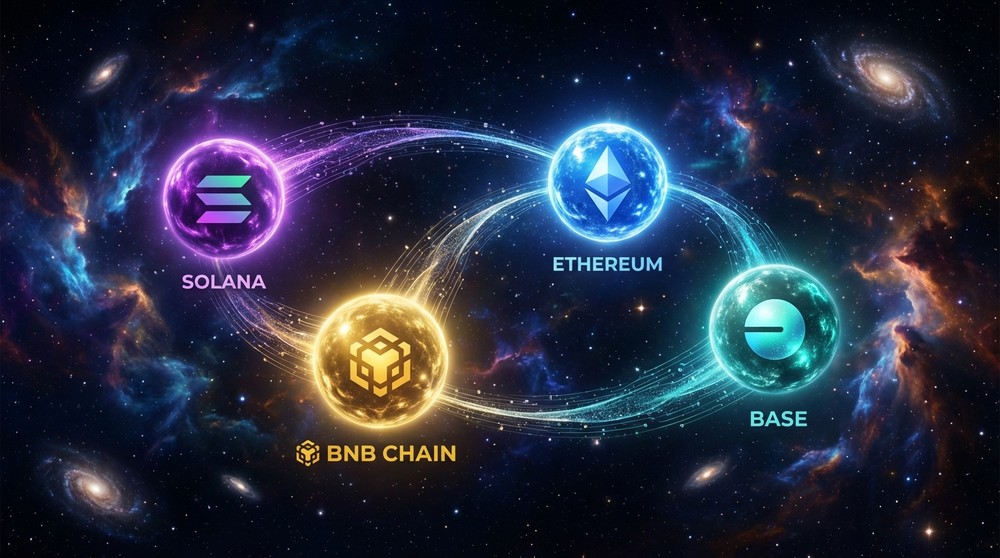
Choosing a blockchain is a strategic decision affecting the entire ecosystem.
| Blockchain | User Fee | Memecoin Activity | Launchpad Competition | Recommendation |
|---|---|---|---|---|
| Solana | $0.001–0.01 | Maximum | High | Top choice for memecoins |
| BNB Chain | $0.05–0.3 | Very High | Saturated | Large existing audience |
| Base (Coinbase L2) | $0.001–0.05 | Growing | Medium | High-potential niche |
| Ethereum | $5–50 | High (large caps) | High | Only for large launches |
| TON | $0.01–0.1 | Growing | Low | Window of opportunity |
| Tron | $0.001–0.02 | Medium | Low | Niche audience |
Blue Ocean Strategy
While most launchpads fight for Solana and BNB Chain, networks like TON, Base, and Blast offer less competition with growing user bases. Launching a memecoin launchpad on TON today is like launching on BNB Chain in 2020. The window is open, but not for long.
Monetization Models: Where the Money Comes From
Let's talk money. A launchpad can be monetized in several ways simultaneously; combining them creates a resilient model.
💰 Listing Fee
Each project pays to be listed. Can be fixed ($200–$5,000) or tiered (basic, standard, premium). Most predictable revenue stream.
📊 Percentage of Presale
Platform automatically takes 2–5% of funds raised in presale. Scales directly with platform success. Scalable revenue stream.
🎯 Token Allocation
The launchpad receives 1–5% of tokens from each launched project. If the token moons, so does your share. Highest potential, most volatile.
👑 Paid Tiers & Subscriptions
Holders of the platform's native token get early allocations, boosts, analytics. Creates recurring demand for the launchpad token and recurring revenue.
📢 Marketing Packages
Promoting projects via the platform's socials, newsletters, partner channels. Fixed packages from $300 to $3,000 for extra reach. Easy to scale with audience growth.
⚡ API Access & White-Label
Sell access to your infrastructure via API subscription or as a white-label solution for other projects. High-ticket B2B revenue.
Aggregate Potential in a Hot Market
With 30-50 monthly launches, a well-run platform can generate $50,000–$200,000+ per month during peak memecoin seasons. This is a target, not a guarantee, and depends on platform quality, traffic, and market conditions.
* Results depend on project quality, traffic volume, platform reputation, and market conditions.
Step-by-Step Launch Guide
You've made the decision. Here's the concrete, step-by-step path. Skip a step, and you'll pay for it in time or money.

Launch roadmap: from idea to first projects.
🗺️ Roadmap: 12 Steps to a Live Launchpad
- Market Research & Niche Selection – Choose blockchain, launchpad type, target audience. Study competitors.
- Define Monetization Model – Decide which revenue streams to use from day one.
- Technical Specification – Detailed document for developers: features, integrations, security.
- Hire Developers – Solidity dev is a must. Check portfolios and past projects.
- Smart Contract Development – 4-8 weeks. Frontend work can start in parallel.
- Testnet Deployment – Never deploy to mainnet first. Use testnets to find critical bugs.
- Security Audit – Mandatory before mainnet. Your insurance and marketing point.
- Landing Page & UX – First impressions are everything in crypto.
- Community Building – Start Twitter/X, Telegram, Discord 6-8 weeks before launch.
- Onboard Anchor Projects – Find 3-5 "anchor" projects for the first launches. Offer incentives.
- Soft Launch – Open to a limited audience, gather feedback.
- Full Launch & Marketing – PR, KOL partnerships, listing on launchpad aggregators.
Timeline and Budget by Phase
| Phase | Timeline | Budget | Priority |
|---|---|---|---|
| Analysis & Planning | 1–2 weeks | $0–500 | 🔴 Critical |
| Smart Contract Dev | 4–8 weeks | $3,000–15,000 | 🔴 Critical |
| Frontend & Integration | 4–6 weeks | $2,000–8,000 | 🔴 Critical |
| Security Audit | 2–3 weeks | $1,500–8,000 | 🔴 Critical |
| Community Building | 6–12 weeks | $500–3,000/month | 🟡 Important |
| Marketing & PR | Ongoing | $1,000–10,000/month | 🟡 Important |
| Total (Estimate) | 3–6 months | $10,000–50,000+ | — |
How to Attract the First Projects
The classic chicken-and-egg problem: projects go where the investors are; investors go where the projects are. How to break the cycle?
Strategies to Attract First Projects
Community: Your Primary Asset
In the memecoin world, community isn't an add-on; it's the core product. Investors go where the crowd is. Projects pay more to be seen by 50,000 people, not 500.
Telegram & Discord
- Launch announcements with deep dives
- Daily memecoin market updates
- AMA sessions with project teams
- Exclusive whitelists for members
- Voting on upcoming listings
Twitter/X Strategy
- 3-5 tweets daily: announcements, analysis, memes
- Threads for deep-dive analysis
- Reacting to crypto trends
- Engaging with other platforms
- Spaces (audio events) for major launches
Points System & Gamification
One of the strongest tools for retention is a points system. Users earn points for: participating in presales, referring friends, social media activity, early sign-ups. Points convert to priority access to allocations or platform tokens. This creates a self-sustaining engagement loop.
Risks and How to Manage Them
Discussing risks isn't about fear-mongering. It's a realistic look at what can go wrong and concrete steps to prevent it. Know the risks to manage them.
⚠️ Technical Vulnerabilities
A smart contract exploit is the worst-case scenario. One exploit = loss of all user funds + permanent reputation loss.
⚠️ Scam Projects
A team pulling a "rug pull" isn't just investor loss; it's a direct hit to your platform's reputation. One major scam can drive away 30% of your audience.
⚠️ Regulatory Risks
Crypto regulation is evolving. What's a gray area today might be illegal tomorrow in some jurisdictions.
⚠️ Market Downturn
In a bear market, interest in memecoins can drop 80-90%. Launchpads built only on hype will fail.
Golden Rule of Risk Management
Never hold user funds in a single-signature contract. Never launch without an audit. Never ignore community warnings about a suspicious project—it's better to lose a listing fee than your platform's reputation.
Essential Tools and Services
The good news: the Web3 ecosystem is full of tools. Don't reinvent the wheel; focus on attracting projects and users.
🔧 Smart Contracts & Dev
- OpenZeppelin – Audited contract libraries
- Hardhat / Foundry – Dev & testing frameworks
- Remix IDE – Online Solidity IDE
- Tenderly – Contract monitoring & debugging
- The Graph – Blockchain data indexing
🌐 Web3 Frontend Integration
- RainbowKit / ConnectKit – Wallet connection
- Wagmi – React hooks for Web3
- Ethers.js / Viem – Blockchain interaction
- Alchemy / QuickNode – RPC providers
- Moralis – Backend-as-a-Service
🔒 Security & Auditing
- CertiK – Smart contract audits
- PeckShield – Audit & monitoring
- Slither / Mythril – Automated code analysis
- Immunefi – Bug bounty platform
- Gnosis Safe – Multi-sig wallet
📊 Analytics & Monitoring
- Dune Analytics – On-chain analytics dashboards
- DEX Screener – Token monitoring post-launch
- Nansen – Wallet analytics
- Mixpanel – Platform behavioral analytics
- Sentry – Frontend error monitoring
📣 Marketing & Community
- Guild.xyz – Discord role management
- Premint – Whitelist management
- Zealy / Galxe – Quests & gamification
- Mailchimp – Email newsletters
- Typeform – Project application forms
💱 DEX & Liquidity
- Uniswap V3 – Ethereum/Base DEX
- PancakeSwap – BNB Chain DEX
- Raydium / Orca – Solana DEX
- Ston.fi – TON DEX
- DeDust – TON ecosystem
Ready to Launch Your Platform?
Start by studying best practices and proven tools. Everything you need to start is in one place.
Frequently Asked Questions

Platform dashboard: analytics, projects, and community interaction.
Can I launch a launchpad without coding skills?
Technically yes, using white-label solutions or hiring a full team. But without understanding smart contracts and Web3, you'll be at the mercy of your team. We recommend a basic Solidity course.
How long to first profit?
Realistic horizon: 4-6 months from starting development. First 1-3 months are pure investment. Profit typically appears after 10-15 successful launches, once reputation and organic traffic grow.
Do I need a native token for the launchpad?
Not initially, but it's recommended for the long term. A native token creates an additional revenue stream and a "stakeholder" community. But don't launch a token without a working platform and track record.
How to protect investors from scams?
Basic measures: mandatory team KYC (can be private), founder token vesting via contract, contract verification, blacklisting known scammers. You can't eliminate risk, but you can minimize it.
Pump.fun is huge. Is there room for another launchpad?
Pump.fun dominates automated fair launches on Solana. But other niches are wide open: KYC-verified IDOs, launchpads on TON/Base/Blast, niche platforms for gaming/AI memecoins. The market is vast.
What's the minimum budget to start?
Absolute minimum for a working MVP with audited contracts: $10,000–15,000. For a full-featured platform with marketing: $30,000–50,000+. Less is possible only with in-house technical skills.
A Memecoin Launchpad is a Business, Not a Lottery
The most successful platforms don't chase 100x tokens. They provide the infrastructure the entire memecoin market runs on. Start by studying the market, find your niche, assemble the right team—and the system will work for you.
Start Learning the PlatformThis article is for educational and informational purposes only. Launching a platform requires significant technical, financial, and legal expertise. Always consult with lawyers and technical experts before making decisions. Cryptocurrency investments carry high risk of loss.