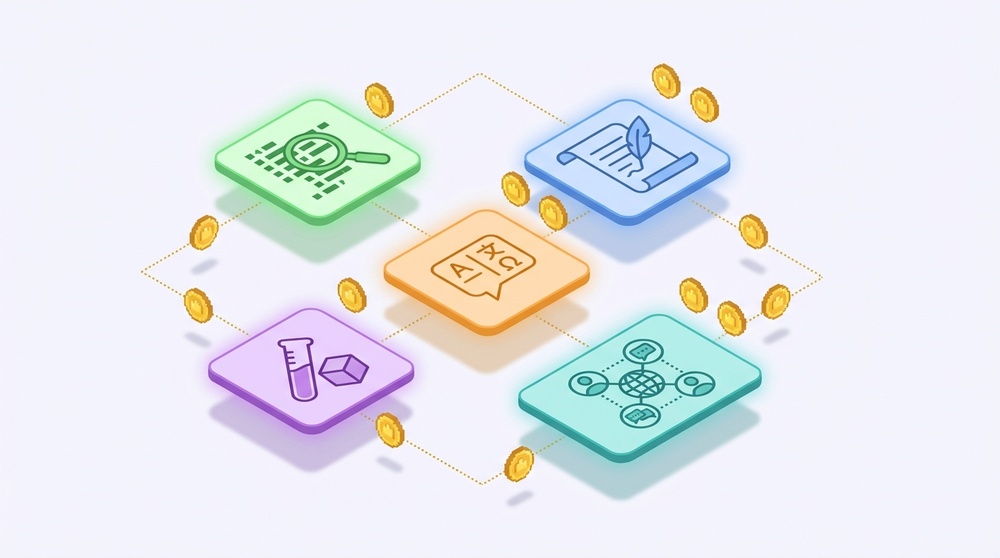













Nodes are the foundation of any decentralized network. Without them, blockchain simply wouldn't exist. By running a node, you become part of a project's infrastructure and receive rewards for maintaining the network. This is one of the most underrated ways to earn in crypto, potentially generating anywhere from a few hundred to tens of thousands of dollars — especially if you're among the early participants of a promising project.
📑 Table of Contents
🖥️ What is a Node and Why Does It Matter
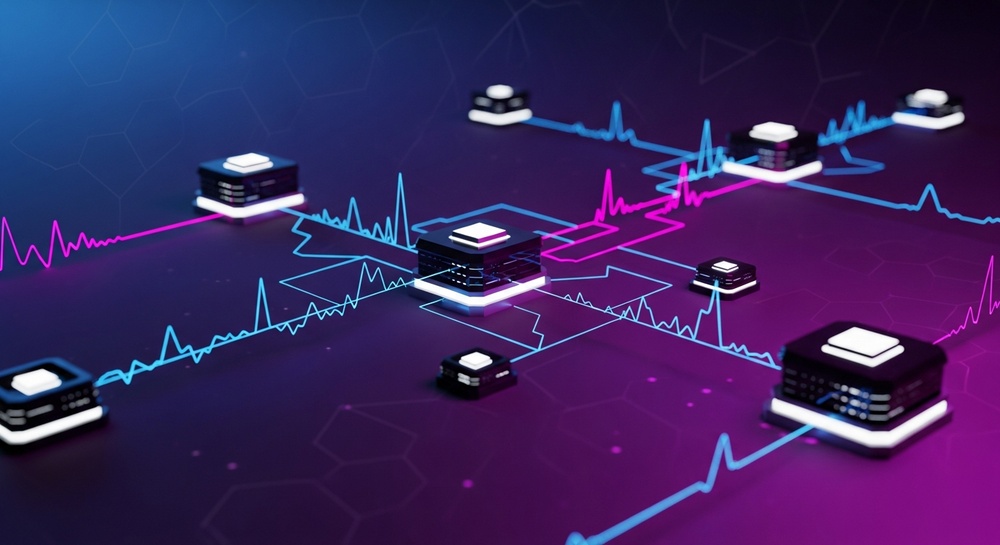
A node is a computer or server connected to a blockchain network that performs specific functions to maintain it. Think of blockchain as a massive distributed database, and nodes as the servers that store copies of this database and process all operations.
Simple Analogy: If blockchain is a giant ledger, then nodes are the accountants who maintain this ledger, verify entries, and synchronize them with each other. For this work, they receive a salary in cryptocurrency.
Core Functions of Nodes
📦 Data Storage
Nodes store a full or partial copy of the blockchain, ensuring decentralized data storage. Even if some nodes go offline, the network continues to operate.
✅ Transaction Validation
Every transaction is verified by nodes for compliance with network rules: does the sender have sufficient funds, is the signature valid, is there a double-spend attempt.
📡 Data Propagation
Nodes transmit information about new transactions and blocks to other network participants, ensuring real-time synchronization of the entire system.
🔒 Security Assurance
The more nodes in a network, the more decentralized and attack-resistant it becomes. Nodes are the guarantors of data immutability and protection against manipulation.
💡 Why This Matters for Earning
Blockchain projects are interested in maximizing the number of nodes to ensure security and decentralization. That's why they're willing to pay node operators — through block rewards, transaction fees, or token distribution during airdrops.
🔧 Types of Nodes and Their Features
There are several types of nodes, each performing different functions and having different earning potential. Understanding the differences is critical for choosing the right strategy.
| Node Type | Functions | Requirements | Profitability |
|---|---|---|---|
| Full Node | Stores entire blockchain history, validates transactions | Medium (100+ GB storage) | Low or none |
| Light Node | Stores only block headers, requests data from full nodes | Minimal | None |
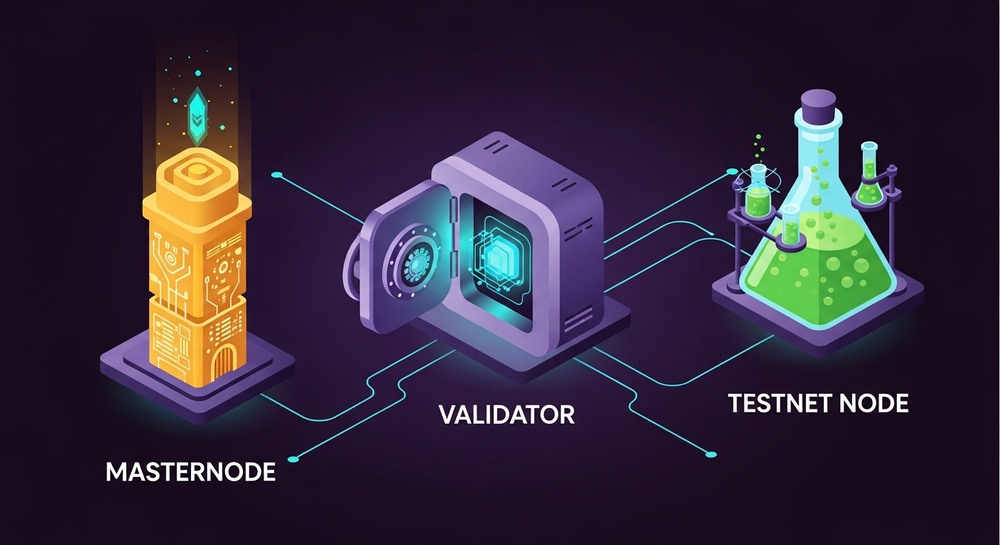
| Masternode | Extended functions: mixing, instant transactions, voting | High (token collateral) | High (5-100%+ APY) |
| Validator Node | Creating and confirming new blocks in PoS networks | High (staking) | Medium-High (5-20% APY) |
| Archive Node | Stores complete history of all blockchain states | Very high (terabytes) | Commercial (API services) |
| Testnet Node | Operating in test networks of new projects | Low-Medium | Potentially very high |
Detailed Breakdown of Each Type
🔹 Full Nodes
Full nodes are the "backbone" of blockchain. They store a complete copy of all transactions since the network's creation and independently verify every operation. In most networks, running a full node doesn't pay directly, but it's necessary for other node types to function.
🔹 Masternodes
Masternodes are privileged nodes with extended functionality. Running them requires locking (staking) a certain amount of project tokens as collateral. In return, the operator receives a portion of block rewards and fees. Masternodes provide additional services: instant transactions (InstantSend), private transfers (PrivateSend), and participation in project governance.
Example: In the Dash network, running a masternode requires a collateral of 1000 DASH. In return, the operator receives approximately 6-8% annually on the collateral value plus participation in voting on project development.
🔹 Validator Nodes
In Proof of Stake (PoS) networks, validators play a key role — they create new blocks and confirm transactions. To become a validator, you need to stake the network's tokens. Income comes from block rewards and transaction fees.
🔹 Testnet Nodes
Test networks are launched by projects before their main release to verify functionality. Testnet participants help find bugs and stress-test the network. In gratitude, projects often distribute real tokens after the mainnet launch — this can be one of the most profitable types of node earnings.
💰 Where the Money Comes From: Earning Mechanics
Before investing time and resources, it's important to understand node economics. Money doesn't appear out of thin air — there's a specific source behind every reward.
Income Sources for Node Operators
New token emission
% from each transaction
Token distribution
DAO rewards
Detailed Breakdown of Sources
1. Inflationary Emission (Block Rewards)
Most blockchains create new tokens with each block. These tokens are distributed among consensus participants: miners in PoW networks, validators and masternodes in PoS networks. This is the primary income source for most nodes.
2. Transaction Fees
Every network user pays a fee for conducting a transaction. These fees are partially or fully distributed among validators and nodes. In active networks, fees can exceed block rewards.
3. Retroactive Airdrops
Many projects reward early testnet participants after mainnet launch. Testnet node operators receive real tokens proportional to their contribution. This can be extremely profitable if the project becomes successful.
4. DAO Grants and Incentive Programs
Decentralized organizations and development funds allocate grants for participation in special programs: running nodes in specific regions, supporting test features, long-term infrastructure operation.
⚠️ Understanding the Economics is Crucial
High APY (Annual Percentage Yield) in nodes often means high token inflation. If the token depreciates faster than you receive rewards — you're losing money in dollar terms. Always evaluate the project's overall tokenomics, not just the yield percentage.
📊 Ways to Earn with Nodes
There are several strategies for earning with nodes — from free testnet participation to serious masternode investments. The choice depends on your goals, capital, and technical skills.
Method 1: Testnet Participation
🎯 Best Starting Point for Beginners
Testnets are test versions of blockchains launched by projects before official release. Participation is usually free or requires minimal costs, but can bring significant rewards after mainnet launch.
✅ Advantages
- Minimal or zero costs
- High profit potential if project succeeds
- Gaining node operation experience
- Opportunity to become an "early" participant
⚠️ Disadvantages
- No guarantee of receiving rewards
- Requires time for monitoring
- Many scam projects
- High competition
💎 Real Case Study: Aptos
Aptos testnet participants who ran nodes and completed tasks received 150 to 300 APT tokens at listing. At peak price, this amounted to $3,000-6,000. Participation costs: server rental of about $20-50 per month over several months.
Method 2: Running Masternodes
💼 Masternodes — Stable Passive Income
Masternodes require significant initial investment (token collateral) but provide stable and predictable income. This option is for those ready to invest from several thousand dollars.
| Project | Required Collateral | Approximate APY | Risk Level |
|---|---|---|---|
| Dash | 1,000 DASH | 6-8% | Low |
| PIVX | 10,000 PIVX | 8-10% | Medium |
| Zcoin (Firo) | 1,000 FIRO | 12-18% | Medium |
| Horizen | 42/500 ZEN | 15-25% | Medium |
Method 3: Validation in PoS Networks
Proof of Stake networks require validators to create blocks. By becoming a validator, you receive rewards for each block created and a share of fees. Major networks (Ethereum, Cosmos, Solana) have high staking requirements, but there are also many smaller networks with accessible entry thresholds.
Ethereum
32 ETH for solo validator. APY: 3-5%. Very reliable but expensive.
Cosmos (ATOM)
Minimum stake not fixed, important to rank among top validators. APY: 15-20%.
Polkadot
Around 350+ DOT for nominator. APY: 12-15%.
Solana
No minimum, but requires powerful server. APY: 6-8%.
Method 4: RPC Nodes and Infrastructure Services
An advanced monetization method — providing API access to your node for other users and developers. You can sell RPC requests directly or through aggregator platforms.
🔌 Direct API Sales
DApp developers need reliable RPC endpoints. You can provide access to your node for a monthly fee or per-request basis. Income: from $100 to several thousand dollars per month depending on network and number of clients.
🌐 Participation in Decentralized Networks
Projects like Pocket Network, Lava Network, Ankr allow you to contribute your node resources to a shared pool and receive protocol token rewards for processing requests.
Method 5: Specialized Network Roles
Some blockchains offer specialized roles beyond standard validation:
🚀 Step-by-Step Node Launch Guide
Regardless of node type, the launch process includes several universal stages. Let's examine a step-by-step algorithm using testnet participation as an example — the most accessible method for beginners.
📋 General 7-Step Algorithm
From project selection to receiving rewards — follow this plan for maximum efficiency.
Step 1: Finding and Selecting Projects
🔍 Where to Find Promising Testnets
- Twitter/X: Follow project accounts and node-sphere influencers
- Discord communities: Node Runners, Crypto Nodes Community
- Aggregators: Nodes.guru, Testnets.guru, Airdrop.io
- GitHub: Track repository activity of promising projects
⚠️ Criteria for Selecting a Reliable Project
Check for: 1) Serious investors (a16z, Paradigm, Sequoia), 2) Public team with reputation, 3) Active GitHub with regular commits, 4) Clear announcement of rewards program. Avoid clone projects and anonymous teams without history.
Step 2: Infrastructure Preparation
🖥️ Option A: VPS Server (Recommended)
Renting a virtual server is the optimal choice for most nodes. The server runs 24/7, independent of your home internet and electricity.
🏠 Option B: Home Server
Suitable for experienced users with reliable internet and uninterruptible power supply. Saves money long-term but requires technical skills.
Step 3: Server Setup
Basic commands to get started: Most nodes run on Ubuntu Linux. You'll need basic command-line skills: SSH connection, package installation, configuration file editing.
Typical Setup Process:
Step 4: Registration and Verification
Most testnets require participant registration. This may include:
📝 Form Completion
Google Form or Typeform with questions about your experience and motivation.
🔗 Wallet Connection
Connecting MetaMask or another wallet to the project platform.
🆔 KYC Verification
Some projects require identity verification to receive rewards.
📊 Participation Monitoring
Registering node address in project dashboard to track activity.
Step 5: Monitoring and Maintenance
💡 Key to Success — Stable Uptime
Many projects evaluate participants by node uptime. Set up monitoring and notifications to quickly respond to issues. Use services like UptimeRobot, Grafana, or simple Telegram bots for alerts.
Step 6: Completing Additional Tasks
Beyond basic node operation, projects often offer additional tasks to increase reward chances:
- Participating in voting and governance proposals
- Testing new features and reporting bugs
- Creating content: guides, videos, articles about the project
- Discord activity and helping other participants
- Participating in stress tests and special events
Step 7: Receiving and Managing Rewards
🎁 When and How Rewards Arrive
Usually 1-6 months
Gradual unlocking
Wallet connection
💻 Requirements and Costs
Understanding technical requirements and financial costs will help properly plan your budget and avoid unpleasant surprises.
Technical Requirements by Node Type
| Node Type | CPU | RAM | Disk | Internet |
|---|---|---|---|---|
| Light Testnet | 2 cores | 4 GB | 50-100 GB SSD | 50 Mbps |
| Medium Testnet | 4 cores | 8-16 GB | 200-500 GB SSD | 100 Mbps |
| Cosmos Network Validator | 4-8 cores | 16-32 GB | 500 GB - 1 TB NVMe | 200+ Mbps |
| Ethereum Validator | 4 cores | 16 GB | 2+ TB NVMe | 100+ Mbps |
| Solana Validator | 12+ cores | 128+ GB | 2+ TB NVMe | 1 Gbps |
| Archive Node | 8+ cores | 64+ GB | 4-10+ TB | 500+ Mbps |
Financial Costs
🖥️ VPS Server Rental
| Basic (2 CPU, 4 GB RAM) | $5-15/mo |
| Medium (4 CPU, 16 GB RAM) | $20-50/mo |
| Powerful (8 CPU, 32 GB RAM) | $50-150/mo |
| For Solana/Ethereum | $200-500/mo |
💰 Staking and Collateral
| Testnets | $0 (test tokens) |
| Small Masternodes | $500-5,000 |
| Cosmos Network Validators | $5,000-50,000 |
| Ethereum Validator | 32 ETH (~$80,000+) |
Money-Saving Tip: Start with testnets on cheap servers (Contabo, Hetzner). As you receive your first rewards, reinvest in more serious infrastructure. Many successful node operators started with a budget of $20-50 per month.
Time Investment
⏰ How Much Time Do Nodes Require
- Initial setup: 2-8 hours per node (depending on complexity)
- Daily monitoring: 15-30 minutes (checking status, logs)
- Updates: 30-60 minutes per update (1-4 times per month)
- Finding new projects: 2-5 hours per week
- Community participation: optional, but increases reward chances
📈 Profit Maximization Strategies
Success in node earnings depends not only on technical skills but also on the right strategy. Let's examine proven approaches for increasing income.

Strategy 1: Node Portfolio Diversification
🎯 Don't Put All Your Eggs in One Basket
Run nodes in multiple projects simultaneously. Even if 70% of testnets don't bring significant income, the remaining 30% can pay off all costs many times over.
Recommended Distribution:
- 40% — promising testnets with major investors
- 30% — medium projects with good teams
- 20% — experimental/risky projects
- 10% — stable masternodes for base income
Optimal Quantity:
- Beginner: 3-5 nodes simultaneously
- Experienced: 10-20 nodes
- Professional: 30+ nodes with automation
Strategy 2: Early Participation
⚡ Early Birds Get More
The earlier you join a testnet, the higher your chances for significant rewards. Early participants often receive bonus multipliers, exclusive roles, and priority in token distribution. Follow announcements and be ready to quickly deploy a node.
📢 Early Announcement Sources
- Project Twitter accounts
- Private Discord channels
- Node runner Telegram groups
- Analyst newsletters (Messari, The Block)
🏃 Quick Start
- Keep a ready server "on standby"
- Learn typical installation procedures
- Prepare configuration templates
- Automate routine operations
Strategy 3: Active Community Participation
Many projects evaluate not only technical participation but also contribution to community development. Active Discord participants, guide authors, and newcomer helpers often receive additional bonuses.
How to Increase Your Chances:
Strategy 4: Cost Optimization
💵 Saving on Servers
- Use providers with good price/quality ratio (Contabo, Hetzner)
- Run multiple light nodes on one server
- Use promo codes and referral programs
- Consider dedicated servers for large volumes
🔄 Reinvestment
- Direct part of profits to infrastructure upgrades
- Accumulate tokens for masternode staking
- Diversify — don't sell all rewards immediately
- Keep a reserve for 3-6 months of expenses
Strategy 5: Automation and Scaling
🤖 Automation Tools
As your node count grows, manual management becomes inefficient. Invest time in learning automation tools:
Installation automation
Node containerization
Monitoring and dashboards
Error notifications
⚠️ Risks and Pitfalls
Earning with nodes is not risk-free. Understanding potential problems will help avoid them or minimize losses.
Financial Risks
📉 Token Depreciation
Project tokens can lose 80-99% of value after listing. High APY won't help if the token itself has depreciated. Diversify and don't hold all rewards in one asset.
💸 Collateral Loss (Slashing)
In PoS networks, validators can lose part of staked tokens for downtime or incorrect behavior. Use reliable infrastructure and monitoring.
🚫 No Reward
Not all testnets lead to airdrops. A project may cancel rewards, change conditions, or shut down entirely. Participate in multiple projects in parallel.
📊 Cost Recovery
Expenses on servers, electricity, and time may exceed received rewards. Keep track of expenses and analyze profitability.
Technical Risks
🔒 Security is Critical
Server hacking can lead to loss of all funds on connected wallets. Use strong passwords, SSH keys instead of passwords, firewall, regular system updates. Never store private keys from wallets with real funds on node servers.
❌ Common Beginner Mistakes
- Using weak passwords
- Ignoring security updates
- Storing seed phrases on server
- Opening unnecessary ports
- Lack of backups
✅ Best Practices
- SSH keys + disable password login
- Fail2ban for brute-force protection
- Separate wallets for each project
- Minimum necessary open ports
- Regular configuration backups
Scam Projects and Fraud
🚨 How to Recognize a Scam
Unfortunately, there are many scammers in the testnet space. Be cautious if you see:
- Deposit requirement — legitimate testnets don't ask for real money to participate
- Anonymous team — no public information about developers
- Unrealistic promises — guaranteed income of thousands of dollars
- Phishing links — fake sites imitating known projects
- Private key requests — never enter seed phrases on third-party sites
Regulatory Risks
Legal Status: Cryptocurrency and staking regulation differs across countries. In some jurisdictions, node income may be taxable. It's recommended to consult with a tax specialist and keep records of all income and expenses.
🛠️ Tools and Services
The right set of tools significantly simplifies node work and increases efficiency. Here are proven solutions for different tasks.
Hosting Providers
| Provider | Advantages | Prices (approx.) | Recommended For |
|---|---|---|---|
| Contabo | Best price/resource ratio | from $5/mo | Testnets, beginners |
| Hetzner | Excellent performance, stability | from $4/mo | Testnets, validators |
| DigitalOcean | Ease of use, good documentation | from $6/mo | Beginners, medium projects |
| Vultr | Many locations, flexibility | from $5/mo | Any projects |
| AWS/GCP/Azure | Maximum reliability and scalability | from $20/mo | Production validators |
Testnet Discovery and Monitoring
🔍 Testnet Aggregators
- Nodes.guru — installation guides and current testnets
- Testnets.guru — database of active test networks
- Airdrop.io — information on airdrops and testnets
- Cosmos Airdrops — specialized resource for Cosmos ecosystem
📊 Masternode Analytics
- Masternodes.online — masternode statistics and ROI
- Masternode.buzz — ratings and analytics
- StakingRewards.com — staking calculators
- Stakingrewards.com — yield comparison
Monitoring and Notifications
📈 Grafana + Prometheus
Professional monitoring stack. Beautiful dashboards, flexible alerts, metrics history.
🤖 Telegram Bots
Instant problem notifications right to your phone. Many projects provide ready-made bots.
⏰ UptimeRobot
Free availability monitoring. Pings your server and notifies about downtime.
📱 Tenderduty
Specialized tool for monitoring Cosmos validators.
Useful Tools
Software for Working with Nodes:
Communities and Information Resources
👥 Where to Connect and Learn
Discord Servers:
- Node Runners
- Cosmos Network
- Ethereum Staking Community
- Testnets Community
Telegram Channels:
- @nodes_guru
- @testnet_nodes
- @airdrop_bounty
- Specific project channels
❓ Frequently Asked Questions
How much can you earn with nodes?
Income varies greatly: from $0 (if testnet doesn't succeed) to tens of thousands of dollars (with successful participation in top projects like Aptos, Sui, Celestia). Masternodes bring stable 5-25% annually on staked amount. Realistic expectations for an active participant: $500-5,000 per month with experience and diversification.
Are technical skills required?
Basic ones — yes. Minimum: ability to work with Linux command line, connect via SSH, install programs. Good news: most skills can be learned in 2-4 weeks of practice. Many projects provide detailed guides with copy-paste commands.
How to choose a promising testnet?
Focus on: 1) Major investors (a16z, Paradigm, Polychain), 2) Public team with reputation, 3) Active GitHub with regular commits, 4) Clear rewards program announcement. Avoid clone projects and anonymous teams without history.
What is slashing and how to avoid it?
Slashing is a penalty for incorrect validator behavior (extended downtime, double block signing). Avoid it by using: reliable hosting with high uptime, monitoring with notifications, key backups, and most importantly — never run one node on two servers simultaneously.
Can you run nodes on a home computer?
Technically yes, but not recommended for serious projects. Problems: unstable internet, power outages, dynamic IP. For testnets with low requirements — acceptable. For mainnet validators — use VPS or dedicated servers.
What's the minimum budget to start?
From $0 to $50 per month. Many testnets can be run on free hosting trial periods or minimal servers for $5-10. Start small, gain experience, and reinvest first earnings into infrastructure expansion.
How long to wait for rewards after testnet?
From 1 month to 1+ year. Typical cycle: testnet (2-6 months) → mainnet launch (1-3 months) → TGE and token distribution (1-3 months) → exchange listing. Many projects also apply vesting — gradual token unlocking over 6-24 months.
Do you need to pay taxes on node income?
Depends on your jurisdiction. In most countries, cryptocurrency income is taxable. It's recommended to keep records of all received tokens, their value at time of receipt, and consult with a tax specialist.
🚀 Ready to Start Earning with Nodes?
Start with testnet participation — it's free and provides invaluable experience. Gradually move to masternodes and validation as you accumulate capital and knowledge. Remember: early participants receive maximum rewards!
Disclaimer: This article is for informational purposes only and is not financial advice. Cryptocurrency investments and running nodes involve risks of capital loss. Before making decisions, conduct your own research (DYOR) and consult with specialists if necessary.